
Where does each dish come from?
Butter chicken, or murgh makhani, was invented in 1947 at Moti Mahal restaurant in Delhi. The story goes that chef Kundan Lal Gujral was looking for a way to use leftover tandoori chicken and tossed it in a sauce of tomato, butter, and cream. The dish stuck. It is unambiguously Indian.
Chicken tikka masala has a murkier origin, but it is widely credited to South Asian chefs working in the United Kingdom in the 1970s, particularly in Glasgow and the surrounding region. A British foreign secretary once called it a "true British national dish." It is Indian-British by lineage — the technique is Indian, the sauce-on-everything format is British adaptation.
How are the sauces different?
Both sauces are tomato-based, creamy, and orange-red. The recipes diverge in three meaningful ways:
- Fat & dairy — Butter chicken leans heavily on butter and cream, giving it a velvety, almost dessert-rich mouthfeel. Tikka masala uses cream plus yogurt, which thins the sauce slightly and adds a tang.
- Spice profile — Butter chicken is built on kasuri methi (dried fenugreek leaves), which gives it that distinctive mildly bitter, hay-like aroma. Tikka masala leans on garam masala — a punchier blend of cumin, coriander, cardamom, and cloves — and usually shows visible flecks of red chili and bell pepper.
- Sweetness — Butter chicken is mildly sweet; many kitchens add a small amount of sugar or honey to round the tomato. Tikka masala is rarely sweetened.
Quick comparison
The differences at a glance:
| Butter Chicken | Tikka Masala | |
|---|---|---|
| Origin | Delhi, 1947 | UK, ~1970s |
| Sauce base | Tomato, butter, cream | Tomato, cream, yogurt |
| Key spice | Kasuri methi (fenugreek) | Garam masala |
| Texture | Velvety, smooth | Slightly textured, often with bell pepper |
| Sweetness | Mildly sweet | Savory, slight tang |
| Spice level | Mild | Mild–medium |
| Color | Pale orange | Deeper red-orange |
How is each one made?
Both dishes start the same way: boneless chicken is marinated in yogurt, ginger, garlic, and spices, then skewered and cooked in a tandoor (a clay oven that runs around 900°F). That cooked chicken is chicken tikka.
For butter chicken, the tikka is simmered in a sauce of pureed tomato, butter, cream, ginger, and kasuri methi. The sauce is reduced slowly until it coats the back of a spoon.
For chicken tikka masala, the tikka is added to a sauce of tomato, onion, bell pepper, garam masala, and cream, often finished with a squeeze of lemon and a sprinkle of fresh cilantro.
Which one should you order?
If you want creamy, mildly sweet, and rich — order butter chicken. If you want slightly more tang, more visible spice, and a punchier finish — order tikka masala. Both are great vehicles for naan and basmati rice. Most first-timers find butter chicken the gentler introduction.
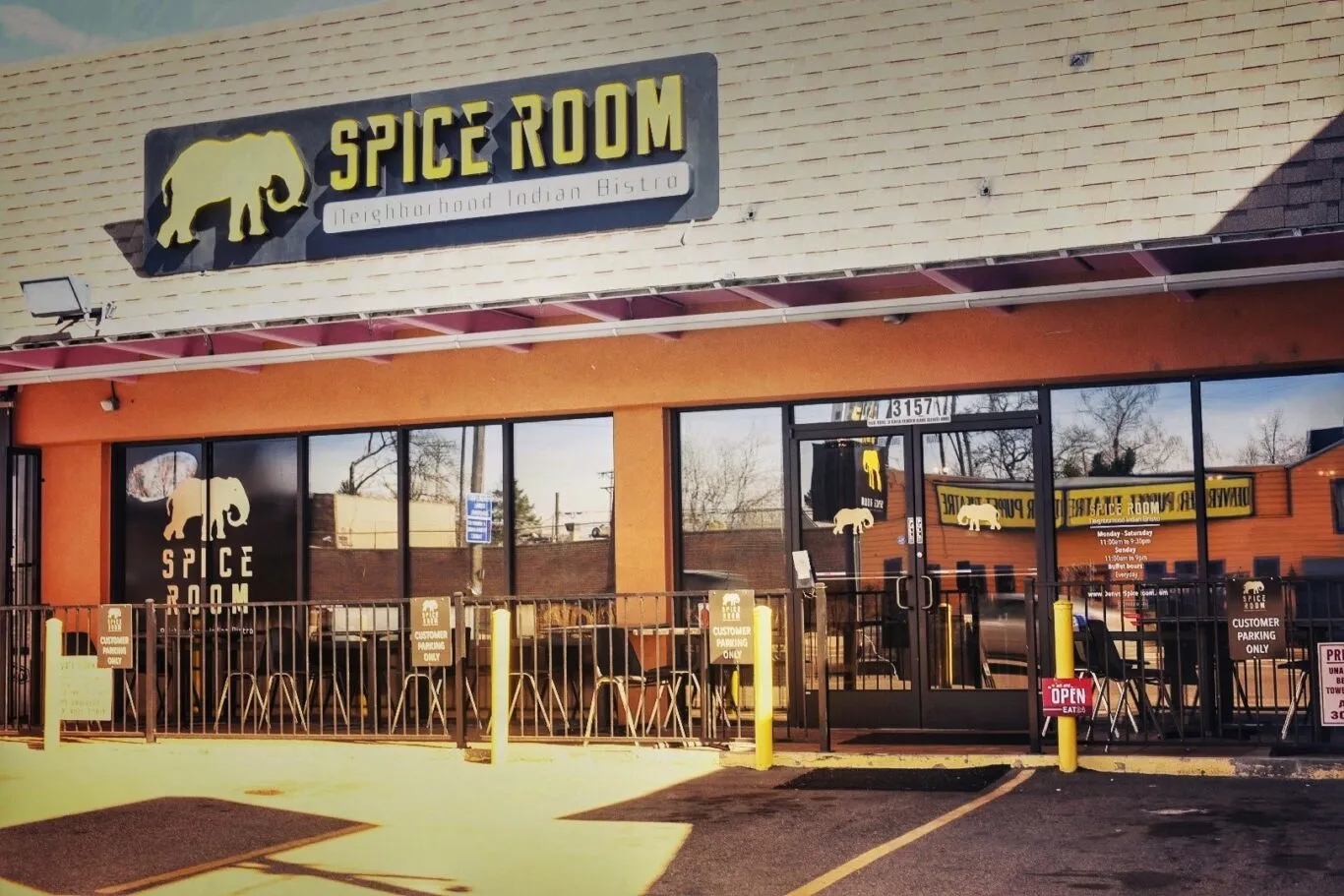
At SPICE ROOM, both dishes are on every location's menu. See the butter chicken dish page and the chicken tikka masala dish page for pricing and ordering. Or compare against the rest of our curry list on the main menu.
Where to try them in Denver
Both dishes are available at all three SPICE ROOM locations: West Highlands, Bluebird / East Colfax, and Olde Town Arvada. For city-wide rankings, see our guide to the best butter chicken in Denver and the best tikka masala in Denver.